Showing posts with label Schubert. Show all posts

Thursday, May 10, 2007

Took a walk in the woods just outside my place after night had fallen. The chilling wind blew, but sounded like a laugh of derision. The trees, with their crooked branches, forming a haunting silhouette with the starless sky as their backdrop, seemed to be whispering with one another, pointing their hands in mockery...

The Schubertian cry... I heard it in my head. The angst and the pain. I felt it. Ich habe genug! A heartwrenching scream!

A period of momentary silence. The wind stopped blowing and the leaves stopped moving. I had managed to come out of the woods after wandering in it mindlessly. How much time had passed? I didn't know. I guessed nothing mattered anymore.

How fitting. Just like the Schubertian introspective moments...

How apt. Floating around, floating around. Despite coming to the perfect cadence in bars 190 and 191, there isn't a sense of rest. Until the descending D minor arpeggio to the A minor chord. Seems to suggest a resignation to the harsh realities of life.


The imitation in the cello part seems to symbolise the slight aftershocks. And with a last breath, it rises up 3 octaves within two bars, sweeping everything away. Such poetry in the music. Reminds me of a poem by Emily Brontë...

It is too late to call thee now
I will not nurse that dream again
For every joy that lit my brow
Would bring its after-storm of pain

Besides the mist is half withdrawn,
The baren mountain-side lies bare
And sunshine and awaking morn
Paint no more golden visions there.

Yet ever in my grateful breast
Thy darling shade shall cherished be
For God alone doth known how blest
My early years have been in thee!

Just as the poem ending with a nostalgic exclamation of the beautiful past, the music is puntuated with the two last two chords with a nostalgic yet exaltant fortissimo.

Saturday, March 03, 2007

A Little Anguish

Been working on the first movement of the Arpeggione Sonata these few days. I managed to get the entire first movement out under my fingertips, and I'm currently shaping it up and getting myself ready for playing together with the accompaniment.

While running through the piece a few times, I always felt a little strange playing the first climax in the exposition section after the 2nd theme has been introduced. I kept running through that portion over and over again. At snail speeds, at leisurely speeds, at breakneck speeds, syncopatedly, with some rhythmic alteration, softly, loudly. Fought with my new guitar and tried so hard to wrench an anguished cry for the climax but the guitar just refused to co-operate. She was unbelievably nonchalant. Finally, I gave up and decided to give us a little more time to try and get along before working at it again. (Ivan, it might be the machinehead...)

In the meantime, I went back to the original urtext edition published by G. Henle Verlag for Violoncello and Piano and got a little surprise.


It's pretty unfortunate that the upper range of the arpeggione is a little too high for the guitar. Guess how did John Williams transcibe it. He actually changed that high C to a G (to suit the style of the running scalic passage before that) and the high Eb to a F# an octave lower (to prepare for the scalic passage the bar after). As such, the climatic point was prematured - 1 crochet and 1 semiquaver beat earlier. How frustrating... I guess it can't be helped, with the tonal range I am given on my instrument. But I can't get over the fact that it's the climax that has been tempered with. There're still other sections whereby the arpeggione part and the piano part has been switched due to the limitations of my instrument.

Can't help feeling a little indignant... Just hope that my new guitar can mature to be a little more co-operative soon...

Sorry, Schubert, for desecrating such a masterpiece of yours...

Thursday, February 08, 2007

On The Arpeggione Again

I just received a note by Dr. Osamu Okumura, the president of the Arpeggione Society in Japan. What a pleasant coincidence that I'm actually working now on Schubert's most beautiful Arpeggione Sonata.

It's amazing how the only currently existing piece of music written for this instrument has piqued the curiosity of so many people around the world, to the extent of re-constructing this obsolete instrument. If I have a chance, I would certainly love to try out this instrument and learn to play this masterpiece this historical instrument. I had written an entry on this instrument when I was first seduced by the immense beauty of this work. Thankfully, the range of the arpeggione that is used in this work falls just barely within the range of the guitar that I am able to try my hands on such a gem and incorporate it into my repertoire.

No groundbreaking compositional techniques or strange harmonies used, but just simply charming. It isn't like Bach whereby I'm continually discovering new things about the works, but somehow, I can never get bored listening or playing this work, probably due to its seamless blend of a wide spectrum of emotions in such most poetic manner...

I'm still in the midst of studying this work. Analysing the entire harmonic structure and texture of this work. A not-so-easy task with the arpeggione being an obsolete instrument. But by studying his works which he had composed in the same period of his life, it does help me understand his style in this Arpeggione Sonata a lot more thoroughly.

Thursday, January 18, 2007

Such Honesty

It just struck me while I was going through some passages in Schubert's Arpeggione Sonata. (Please pardon me if I have been rambling on and on about this work for the past few weeks, months or even years. I'm continually unearthing something new every single time I pick up this work to study) Just from this small work of Schubert alone, he has exhibited such honesty in expressing and portraying the vulnerability and longing of each human soul in music. It really doesn't attempt to hide or dramatise anything. No pretension. No unnecessary superficial ornaments. No deception. Just a simple, forthright yet poignant presentation of such aspects of the human soul....

Oh, thank you so much, Schubert...

Thursday, January 11, 2007

The Different Touch

I'm working on a few pieces recently, and in the midst of hopping between the pieces during my practice, I have found myself having very contrasting touch when approaching those pieces. It isn't very much an initial, conscious effort to produce that particular touch required for the music which is placed on the stand in front of me. To discover more about this (un)natural phenomenon, I dived into my inner world and tracked my subconscious way of functioning closely. Two pieces. Astor Piazzolla's Verano Porteño and Franz Schubert's Arpeggione Sonata.
As I take on the former, which is in the form of an Argentinian Tango, the sounds which I draw from my instrument are naturally raw compared to some mainstream classical works. I find myself visualising myself dancing, and upon reaching the offbeat accents, I would whisk my partner in an exciting and quick turn around the dance floor. It's probably due to my subconscious acknowledgment of the more exciting and surprising nature of those accents that gives rise to the raw touch.

In the latter, I was working on the first movement. Even if the music comes to an intense climax, I find the sounds which I attempt to caress from my instrument are well rounded and refined, seemingly trying to present those emotional moments in a more palatable and most poetic manner. In the sections leading up to those intense moments of the music, my fingers produced their most delicate touch and attempt an elegant dance above the strings. Dramatic still of course (as what Schubert would like to express), but in a special blend with musical poetry in the passages (as his usual distinctive style).

It certainly seems that the knowledge of the composers' lives, their compositional style and the societies in which they were living in does contribute to these subtle yet important variations in touch when playing their music. Passages with an almost similar texture and even harmonic progressions have different significances in different works and thus, are treated differently.


P.S: I would like to express my gratitude to a fellow musician based in Brazil, Xan, for helping me out with the pronunciation of Piazzolla's Verano Porteño and for all the information of the Latin American music which he has given me. That certainly helped in my interpretation and understanding of the music.

Thursday, May 25, 2006

A Little Music In The Background

As I walk up the same path home in the drizzle today, I seem to be hearing some particular movements of Schubert's Winterreise at the back of my head. It's a strange feeling which no words can aptly express. And the walk definitely took a little longer than usual today...

Monday, February 27, 2006

Schubert's Arpeggione Sonata


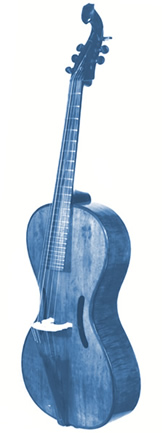
The arpeggione is an instrument which is obsolete nowadays. Pretty interesting instrument which is somewhat like a cross between a cello and guitar. Fretted, the instrument is played with a bow and tuned to the guitar. Back in the early 19th century, Schubert wrote a sonata for the arpeggione and piano, in an attempt to promote this instrument.

Written in November 1824, the Arpeggione Sonata is one of his many late compositions which candidly reflects this Austrian composer's volatile emotional state due to the effects of the syphilitic infection which he had contracted. This composition is such a gem in itself simply because it is the sincere reflection of how this one of the most gifted composer had felt in the last years of his life. This fact alone gives meaning and a deep emotional value to every single note and chord which is written.

This sonata was written two years after the dreaded disease had set in. The music exhibited the same cyclothymic characteristics as the effects felt by Schubert from the onslaught of his venereal disease. The more I listen to this music, the stronger the emotion of melancholy I feel. Somehow, it seems that Schubert, in the midst of his physical and emotional pain (probably from the social stigma associated with syphilis), laments the transience of life and reminisces the good times which he had had.

One feature of this composition which strikes me upon the first hearing were the various almost unexpected changes of mood throughout the music. At the same time, I'm well amazed at how Schubert had the magical musical ability to blend those extreme diverse emotional moods into a seamless music composition of the highest quality.

Though Schubert had immense respect for his contemporary Beethoven, the intensity of those emotions in his music isn't conveyed through to the listeners by intense drama found in Beethoven or Mahler's music, but his own unique poetic style. His lyricism and poetic qualities shines through even in the maddest moments of his music, touching the listeners in the most special way.

And of course, this gem, will soon be in my repertoire. I just can't resist learning this piece of music, no matter how technically challenging it is for my instrument. I'm surprised that they actually have the first movement of this music in the ABRSM Grade 8 syllabus. The almost 10-minute movement can easily be technically and musically more challenging than the rest of the music in there.

Tuesday, August 02, 2005

Schubert's Arpeggione Sonata

Now for something more traditional instead of those tick-tock-bang-boom modern pieces. Have been listening to Franz Schubert's Arpeggione Sonata pretty often these few days. Parts of this profound and emotionally volatile piece sounds terribly anguished and exhibits such cyclothymic qualities while the other parts present the cheerful and lively side of his character, even sounding sugary sweet at times. And the magical side of this piece to me is the transitions between the dark and bright sides never sounded unnatural and it reflects how much emotional turmoil Schubert had gone through in the process of composing this magnificent piece of art.

It was written exactly two years after he contacted syphilis and the following excerpt is part of a letter Schubert had written to his friend Leopold Kupelweiser:

In a word, I feel myself to be the most unhappy and wretched creature in the world. Imagine a man whose health will never be right again, and who in sheer despair over this ever makes things worse and worse, instead of better; imagine a man, I say, whose most brilliant hopes have come to nothing, to whom the joy of love and friendship have nothing to offer but pain, at best, whose enthusiasm (at least of the stimulating kind) for all things beautiful threatens to vanish, and ask yourself, is he not a miserable, unhappy being? — "My peace is gone, my heart is sore, I shall find it never and nevermore." I may well sing every day now, for each night, I go to bed hoping never to wake again, and each morning only tells me of yesterday's grief.
-Franz Schubert, Dokumente 1817-1830, i: Texte, ed. T. G. Waidelich (Tutzing, 1993) 234

And I just know that I'm not going to let this most beautiful gem escape me and I shall master the transcription of piece for guitar and a string ensemble in the near future.