Woke up to the most beautiful of mornings despite my late night yesterday and attended church in the morning. Today's sermon was different from before in a special way. It felt more intense and the focus of the message, Romans 6, was brought alive in an extraordinary way. Our pastor, too, was thrown into an agitated state much earlier into the sermon than normal. While processing the contents of the sermon in my head, these observations entered my mind, just like a second melody line in counterpoint.
Why did our pastor comment that today's sermon wasn't easily digestible and yet his descriptions were so much more vivid and spontaneous, just the opposite of what one would expect when the message is supposed to be harder to expound and require more preparations? No, it certainly wasn't the sudden surge of divine inspiration regarding the passage, for he had understood the message thoroughly long before today, nor was it because of the passage containing the most special biblical truth. Then it struck me. Our pastor had empathised with Paul's most sincere need to address that biblical issue in light of the circumstances surrounding it during his day. Out of respect of Paul's intention while penning that passage, he was infected with the similar state of being. As a pastor, he had found out the way the passage demanded to be taught, resulting in such an honest delivery of today's message.
And then the sermon was taken over by the most perfect Teacher - Jesus Christ. Don't you see a connection to your music? How often have you encountered a pathetically empty rendition of a masterpiece? What exactly are those performers lacking? Why do you play that flattened 6th chord like it's the most common chord around? Have you been desensitised by those popular songs which uses that chord until it's becomes so cliche? Where did the colours of the flattened 6th chord which the composer had intended go to?
Have you truly appreciated and respected what the composer had written and where is your sincere need to recreate the emotions which gave birth to those masterpieces?
These questions just invaded my head. Teacher Jesus seems to be assessing my absorption abilities this morning and decided to bombard my puny mind with excessive information. He sure gave my sufficient information to keep my mind working for the rest of the day, both on biblical and musical issues.
I love my contrapuntal mind, though it gets a little overwhelming at times...
Sunday, July 02, 2006

Tuesday, June 27, 2006
(Un)Musical Nightmare
I knew I should have completed the entire work that night, or rather, early morning (given the fact that it was after midnight). I woke up after just an hour after entering dreamland, with my whole mind occupied with my most futile attempts to resolve that famous Tristan chord, with a physical effect of rendering me breathless. I sure I felt like I didn't breathe at all for the entire hour of sleep.
I had gone through the first act a couple of times earlier in the day in bits and pieces but I guess it was the final and most brain-cell-sapping attempt to dissect the first act alone just minutes before I go to bed which resulted in such a bad sleep. I spent the rest of the early morning listening to just the second act and thinking about the masterpiece, at least just the first two acts and depriving myself of the resolution of the chord at the end of the work a while longer.
Mark my words in the previous entry, when I described the harmonies and rhythms as "almost vulgar", not vulgar, for he has managed to express such passionate emotions in the least obscene manner. The profundity of the work can be heard and felt in just the first act, where the text itself shows forth an apparent enraged riposte between Tristan and Isolde, but the music hints at a deep and complicated romantic relationship between the lovers. Just done in the most masterful manner by Wagner.
Despite my wonder and admiration for Wagner's brilliance, do not mistake me for a supporter of Wagner's strong anti-semitic personality. Like what Solti, a Hungarian Jew, had mentioned, politics doesn't exist in the first four measures of Tristan und Isolde when he hears or conducts the work. It's just amazing how music can transcend such physical boundaries and affect the hearts of people in just the same way.
I had gone through the first act a couple of times earlier in the day in bits and pieces but I guess it was the final and most brain-cell-sapping attempt to dissect the first act alone just minutes before I go to bed which resulted in such a bad sleep. I spent the rest of the early morning listening to just the second act and thinking about the masterpiece, at least just the first two acts and depriving myself of the resolution of the chord at the end of the work a while longer.
Mark my words in the previous entry, when I described the harmonies and rhythms as "almost vulgar", not vulgar, for he has managed to express such passionate emotions in the least obscene manner. The profundity of the work can be heard and felt in just the first act, where the text itself shows forth an apparent enraged riposte between Tristan and Isolde, but the music hints at a deep and complicated romantic relationship between the lovers. Just done in the most masterful manner by Wagner.
Despite my wonder and admiration for Wagner's brilliance, do not mistake me for a supporter of Wagner's strong anti-semitic personality. Like what Solti, a Hungarian Jew, had mentioned, politics doesn't exist in the first four measures of Tristan und Isolde when he hears or conducts the work. It's just amazing how music can transcend such physical boundaries and affect the hearts of people in just the same way.
Thursday, June 15, 2006
Mass In B Minor
It was an evening of pure ethereal bliss. The Collegium Vocale Gent from Belgium came down to town to perfrom Bach's Mass in B minor. This ensemble founded by Philippe Herreweghe in 1970 is renowned for their interpretation of Baroque music and boasts of over 70 recordings since they were established.
The Mass in B minor was written when Bach was still holding the post of Kapellmeister at St. Thomas in Leipzig. The first question that seems to strike most people upon the realisation of the existance of this work is probably why Bach, a most devout Lutheran, would compose a Mass of such monumental proportion. Of course, the simple explanation that the work was too long to be used for a Catholic service was often put forth to appease the simple-minded that Bach was still the man with a firm protestant faith, but it doesn't quite answer the question about the significance of such this masterpiece. An honest listening to the music actually hinted a deeper and more meaningful significance of this work.
In this work, Bach had used a multitude of styles, from the traditional motets to the contemporary concerto and the different fugal forms, each honed to the highest level in both the ripieno singers and concertino singers movements. The existance of such a colourful myriad of styles hints at a composition to showcase the composer's compositional techniques, rather than one with a more coherent musical content. On top of that, the departure of the standard Latin text and standard structure of certain sections would bar its use from both the Catholic and Protestant masses. Given the importance and significance of the mass in traditional vocal music, it wouldn't be surprising that Bach would actually like to try his hands on this particular 'form' of vocal music which has proven itself to be able to withstand the onslaught of time and changing musical tastes.
Back to the performance last evening. The ensemble was conducted by the founder, Philippe Herreweghe, with Johanette Zomer (Soprano I & II), Damien Guillon (Countertenor), Julius Pfeifer (Tenor) and Thomas E. Bauer (Bass) as the concertino singers. So many aspects to talk about, but I guess I'll start with the conductor and ripieno section, for this work focusses on the choral genre instead of the concertino section, unlike his dramatic Passions and oratorio.
As Philippe Herreweghe walked onto the stage, he looked frail and walked with uneven steps, probably due to hsi old age. Nothing of the power and confidence that exude from the most of the professional orchestral conductors. Let me warn you, looks are deceiving. Beneath that facade is a man of true passion for and knowledge of music. Upon the sounding of the first tutti B min chord, our conductor was brought alive, infused with a musical sensitivity of the highest order. Nothing showy about his actions, but each and every minute action on his part yield a most charming musical effect by his very own ensemble.
Not having the chance to listen to this ensemble before, I was expecting a solemn and rigid playing posture which is characteristic of various professional groups which I had come across in the past few years. I was probably blinded by the fact that they are playing and singing a sacred vocal work. Nothing could be further away from the truth. The ensemble, under the leadership of their conductor, breathed life into this most marvellous work and at the same time, swaying together in the most harmonious and aesthetically pleasing manner. (Not everyone would agree with what they were doing, nor would I agree with every ensemble playing like that all the time, but the way they did it last evening was sure not exaggerated, neither did it affect their playing much from my perspective.) I was pretty amused by this violist who had a pretty awkward right hand position of holding the bow, but apparently enjoying herself as she joins in the music making with the rest of the ensemble. It's sure a most wonderful feeling to be able to make such lovely music with a group of dedicated musicians who feel and think the same way as you do. Alright, guess I should go back to my main topic...
In the ripieno chorus movements of the work, the one which struck me most last evening was no doubt the Cruxifixus. The musicians did justice to Bach's most refined instrumentation in that movement and on top of that, brought out the most potent effect that Bach had created in the concluding section of the movement. As the last two words sepultus est were sung in a cappella style, one could really feel the entire concert hall holding their breath. For that particular moment, time truly stopped and we were all surrounded by the grandest architecture of sounds.
The concertino section were truly charming last evening as well. Well, I didn't quite like the idea of the sole soprano taking on the parts of the two soprano soloists which Bach had intended. As such, the Soprano II role in Christe eleison was taken on by the countertenor. But despite that authenticity flaw, I was still charmed by their duet, with the violin I and II providing the other voice.
I just love the four arias in Gloria. In each, a different principal orchestral instrument is used for the solo, with the solo violin in Laudamus te, solo transverse flute in Domine Deus, the solo oboe d'amore in Qui sedes ad destram Patris, the solo horn in Quoniam tu solus sanctus. Bach gave the four solo instruments, together with the solo singers the most charming and highly individual parts, and blended them together in the most wonderful manner. The last was probably marred by some wrong notes and quite a string of notes with bad intonation, but I guess it's tough for the horn to be just playing one movement for the entire work, coupled with the fact of having to wait quite some time before the movement commences. A horn isn't exactly an easy orchestral instrument to play anyway.
The oboes were especially beautiful, with their most charming tone, coupled with a matured musical sense of the oboists. Oboe d'amore to be more specific. My favourite concertino section would have to be Et in Spiritum Sanctum in the Credo section, with the two oboe d'amore playing the solo instrument parts. They just sound so lovely with the bass last evening. Alright, it's probably a biased comment, for I have always loved the oboe.
As for the Benedictus, they gave the solo instrument part to the transverse flute. The basic practice in their time and all the way up to Beethoven was to attribute the part to the solo violin. In the case of this work, since Bach didn't specify which instrument to take the solo and the tuning fits that of a transverse flute more than that of the violin, I guess that interpretation is justified.
The interpretation of the work on the whole was just the way this masterpiece deserves - refined, charged with life and filled with the most profound spiritual truth. For the whole two hours, I believe that I didn't exist on this earth at all.
It is truly a work which shows forth Bach's invocation and praise for God Almighty. A work, as Christoph Wolff has aptly put it, to unite his creed as a Christian with his creed as a musician in a single statement.
The Mass in B minor was written when Bach was still holding the post of Kapellmeister at St. Thomas in Leipzig. The first question that seems to strike most people upon the realisation of the existance of this work is probably why Bach, a most devout Lutheran, would compose a Mass of such monumental proportion. Of course, the simple explanation that the work was too long to be used for a Catholic service was often put forth to appease the simple-minded that Bach was still the man with a firm protestant faith, but it doesn't quite answer the question about the significance of such this masterpiece. An honest listening to the music actually hinted a deeper and more meaningful significance of this work.
In this work, Bach had used a multitude of styles, from the traditional motets to the contemporary concerto and the different fugal forms, each honed to the highest level in both the ripieno singers and concertino singers movements. The existance of such a colourful myriad of styles hints at a composition to showcase the composer's compositional techniques, rather than one with a more coherent musical content. On top of that, the departure of the standard Latin text and standard structure of certain sections would bar its use from both the Catholic and Protestant masses. Given the importance and significance of the mass in traditional vocal music, it wouldn't be surprising that Bach would actually like to try his hands on this particular 'form' of vocal music which has proven itself to be able to withstand the onslaught of time and changing musical tastes.
Back to the performance last evening. The ensemble was conducted by the founder, Philippe Herreweghe, with Johanette Zomer (Soprano I & II), Damien Guillon (Countertenor), Julius Pfeifer (Tenor) and Thomas E. Bauer (Bass) as the concertino singers. So many aspects to talk about, but I guess I'll start with the conductor and ripieno section, for this work focusses on the choral genre instead of the concertino section, unlike his dramatic Passions and oratorio.
As Philippe Herreweghe walked onto the stage, he looked frail and walked with uneven steps, probably due to hsi old age. Nothing of the power and confidence that exude from the most of the professional orchestral conductors. Let me warn you, looks are deceiving. Beneath that facade is a man of true passion for and knowledge of music. Upon the sounding of the first tutti B min chord, our conductor was brought alive, infused with a musical sensitivity of the highest order. Nothing showy about his actions, but each and every minute action on his part yield a most charming musical effect by his very own ensemble.
Not having the chance to listen to this ensemble before, I was expecting a solemn and rigid playing posture which is characteristic of various professional groups which I had come across in the past few years. I was probably blinded by the fact that they are playing and singing a sacred vocal work. Nothing could be further away from the truth. The ensemble, under the leadership of their conductor, breathed life into this most marvellous work and at the same time, swaying together in the most harmonious and aesthetically pleasing manner. (Not everyone would agree with what they were doing, nor would I agree with every ensemble playing like that all the time, but the way they did it last evening was sure not exaggerated, neither did it affect their playing much from my perspective.) I was pretty amused by this violist who had a pretty awkward right hand position of holding the bow, but apparently enjoying herself as she joins in the music making with the rest of the ensemble. It's sure a most wonderful feeling to be able to make such lovely music with a group of dedicated musicians who feel and think the same way as you do. Alright, guess I should go back to my main topic...
In the ripieno chorus movements of the work, the one which struck me most last evening was no doubt the Cruxifixus. The musicians did justice to Bach's most refined instrumentation in that movement and on top of that, brought out the most potent effect that Bach had created in the concluding section of the movement. As the last two words sepultus est were sung in a cappella style, one could really feel the entire concert hall holding their breath. For that particular moment, time truly stopped and we were all surrounded by the grandest architecture of sounds.
The concertino section were truly charming last evening as well. Well, I didn't quite like the idea of the sole soprano taking on the parts of the two soprano soloists which Bach had intended. As such, the Soprano II role in Christe eleison was taken on by the countertenor. But despite that authenticity flaw, I was still charmed by their duet, with the violin I and II providing the other voice.
I just love the four arias in Gloria. In each, a different principal orchestral instrument is used for the solo, with the solo violin in Laudamus te, solo transverse flute in Domine Deus, the solo oboe d'amore in Qui sedes ad destram Patris, the solo horn in Quoniam tu solus sanctus. Bach gave the four solo instruments, together with the solo singers the most charming and highly individual parts, and blended them together in the most wonderful manner. The last was probably marred by some wrong notes and quite a string of notes with bad intonation, but I guess it's tough for the horn to be just playing one movement for the entire work, coupled with the fact of having to wait quite some time before the movement commences. A horn isn't exactly an easy orchestral instrument to play anyway.
The oboes were especially beautiful, with their most charming tone, coupled with a matured musical sense of the oboists. Oboe d'amore to be more specific. My favourite concertino section would have to be Et in Spiritum Sanctum in the Credo section, with the two oboe d'amore playing the solo instrument parts. They just sound so lovely with the bass last evening. Alright, it's probably a biased comment, for I have always loved the oboe.
As for the Benedictus, they gave the solo instrument part to the transverse flute. The basic practice in their time and all the way up to Beethoven was to attribute the part to the solo violin. In the case of this work, since Bach didn't specify which instrument to take the solo and the tuning fits that of a transverse flute more than that of the violin, I guess that interpretation is justified.
The interpretation of the work on the whole was just the way this masterpiece deserves - refined, charged with life and filled with the most profound spiritual truth. For the whole two hours, I believe that I didn't exist on this earth at all.
It is truly a work which shows forth Bach's invocation and praise for God Almighty. A work, as Christoph Wolff has aptly put it, to unite his creed as a Christian with his creed as a musician in a single statement.
Saturday, June 03, 2006
Kissed By The Stars Tonight
I stopped by the pool on the way home from the Bible Study session to observe the night sky tonight. Surprisingly, on this developed island which boasts of light pollution, the skies are dotted with myriads of stars from my position beside the poolside on this night. Plugged in my earphones and saturated my surroundings with some light-hearted bossa nova music before lying down to gaze at the velvety skies. Indulging in such a lovely environment, I swayed to the underlying gentle rhythms, clearing my mind of all the chaos and clutter of the week. The most magical moment came when I caught a shooting star making its trip across the universe. It's such an indescribable joy to be able to behold the creations of our omnipotent God. Throughout the period I spent beside the pool, it truly feels as if time stopped and the God sent the angels to visit me tonight.
Earlier in the day, I made a mistake in choosing the wrong music to start the day off. The drama in Schubert's song cycles proved too much for my emotional threshold in the morning and sent me into a despondent state for the rest of the day. Thankfully, the Bible Study session lifted my spirits and with the most magical time spent beneath the velvet sky, I was in a much better state to practise for tomorrow's rehearsal.
Guess I'll take a sabbatical from classical music and go for some salon music this weekend. Shall be playing Vincente Sojo's arrangement of a Venezuelan tune for tomorrow's solo session. It's going to be a long night of practice again...
Earlier in the day, I made a mistake in choosing the wrong music to start the day off. The drama in Schubert's song cycles proved too much for my emotional threshold in the morning and sent me into a despondent state for the rest of the day. Thankfully, the Bible Study session lifted my spirits and with the most magical time spent beneath the velvet sky, I was in a much better state to practise for tomorrow's rehearsal.
Guess I'll take a sabbatical from classical music and go for some salon music this weekend. Shall be playing Vincente Sojo's arrangement of a Venezuelan tune for tomorrow's solo session. It's going to be a long night of practice again...
Saturday, May 27, 2006
The Fugue
After being in touch with different forms of music for quite some time, I have to mention that I really, really, really love fugues. In the hands of genius composers, their fugal compositions shine well above the rest of their works and never fail to amaze me. The complexity of the form seems to make the fugue fit for expressing the most profound of musical ideas.
I just got myself The Study Of Fugue by Alfred Mann. Well, I pretty much gave up after the first few pages. I realise I need a whole lot more knowledge of contrapuntal writing before I can start on this book which specialises in the fugue alone. Just thought an understanding of the fugue will aid me in my performance of those fugues which I most adore but I realise studying the fugue will take me on the most demanding musical journey. I'll take it easy for now, since I'm not much into composition, though I sure have a strong desire to find out how the whole form works.
Now, we shall see how it works out from here. Back to my practice for now...
I just got myself The Study Of Fugue by Alfred Mann. Well, I pretty much gave up after the first few pages. I realise I need a whole lot more knowledge of contrapuntal writing before I can start on this book which specialises in the fugue alone. Just thought an understanding of the fugue will aid me in my performance of those fugues which I most adore but I realise studying the fugue will take me on the most demanding musical journey. I'll take it easy for now, since I'm not much into composition, though I sure have a strong desire to find out how the whole form works.
Now, we shall see how it works out from here. Back to my practice for now...
Thursday, May 25, 2006
A Little Music In The Background
As I walk up the same path home in the drizzle today, I seem to be hearing some particular movements of Schubert's Winterreise at the back of my head. It's a strange feeling which no words can aptly express. And the walk definitely took a little longer than usual today...
Thursday, May 18, 2006
The Power Of Three
For these few weeks, 3 pieces have caught my attention. They're Prelude, Fugue and Allegro, BWV 998 by J.S. Bach, Grand Overture by Mauro Giuliani and Granada from Suite Espanola by Isaac Albeniz. They aren't easy pieces and I wonder how long would it take for me to infuse all 3 masterpieces into my repertoire, given my busy schedule in the upcoming few months...
Don't you think it's just the most wonderful feeling when you can indulge yourself spiritually and emotionally in the most stunningly beautiful piece of music you have spent so much time and effort analysing and mastering?
Don't you think it's just the most wonderful feeling when you can indulge yourself spiritually and emotionally in the most stunningly beautiful piece of music you have spent so much time and effort analysing and mastering?
Saturday, April 29, 2006
Simple Pleasures
Isn't it amazing how the oldest music never fail to amaze us with their stunning beauty?
It has been a tramatic week filled with non-musical work and tramatic happenings. I shall do away with the details, but thank God, the week ended peacefully. For the first time in the week, I have the time to sit down and study a score in peace. Since the sheet music for J.S Bach's Flute Sonata BWV 1034 arrived this week, the desire for all things new drove me to make it the subject of my study on this beautiful Saturday.
The numerous themes which Bach had used in the crafting of this 4 movement (slow-fast-slow-fast) work are wonderously pure, weaved into one whole seamless musical fabric with such mastery. After studying the score and being moved by it immensely, it set me thinking. Bach's living conditions were far from comfortable, yet all of his pieces of music are filled with either joy, peace or hope, and every single masterpiece shows his yearning for the ideal state of life, where he could be at peace with the his Almighty Father. It's just how miraculous how every single work can be so mightily charged with a strong spiritual meaning. Our beloved Father has been truly gracious to leave humankind with such stunningly beautiful masterworks through His faithful musical servant. Amen.
5 weekdays facing the ugly sides of human nature before finding peace with God through His Word and music. The peace which eluded me for the past 5 days is sure a welcoming phase in my week. I shall be working doubly hard to infuse a Bach masterpiece into my repertoire.
It has been a tramatic week filled with non-musical work and tramatic happenings. I shall do away with the details, but thank God, the week ended peacefully. For the first time in the week, I have the time to sit down and study a score in peace. Since the sheet music for J.S Bach's Flute Sonata BWV 1034 arrived this week, the desire for all things new drove me to make it the subject of my study on this beautiful Saturday.
The numerous themes which Bach had used in the crafting of this 4 movement (slow-fast-slow-fast) work are wonderously pure, weaved into one whole seamless musical fabric with such mastery. After studying the score and being moved by it immensely, it set me thinking. Bach's living conditions were far from comfortable, yet all of his pieces of music are filled with either joy, peace or hope, and every single masterpiece shows his yearning for the ideal state of life, where he could be at peace with the his Almighty Father. It's just how miraculous how every single work can be so mightily charged with a strong spiritual meaning. Our beloved Father has been truly gracious to leave humankind with such stunningly beautiful masterworks through His faithful musical servant. Amen.
5 weekdays facing the ugly sides of human nature before finding peace with God through His Word and music. The peace which eluded me for the past 5 days is sure a welcoming phase in my week. I shall be working doubly hard to infuse a Bach masterpiece into my repertoire.
Sunday, April 16, 2006
West Side Story
When first premiered in New York in 1957, West Side Story marked a new milestone in American theater history. Based on a modernised adaptation of Shakespeare's Romeo and Juliet, the musical is set in modern New York as a clash between two street gangs. On top of that, the story also highlighted the social problems which plagued the society at that time.
This year, this musical is brought into Singapore. A totally phenomenal performance, and the score by Leonard Berstein is nothing short of brilliant. Directed by Joey McKneely, one of the only three directors authorised to stage this most captivating musical, this musical is brought alive with the heartwarming story, powerful music and remarkable choreography.
This season, we have a group of cast and remarkably energetic cast performing here. Josh Young stars as Tony and Kirsten Rossi as Maria. Truly magical partnership and vocal skills. Both sung their parts splendidly and Kirsten Rossi sure got her Puerto Rican accent out well. The only problem is that her highest registers comes across as overly shrill. Other than that, the other aspects are just marvellous.
Would definitely consider this rare theatre performance nothing short of spectacular.
This year, this musical is brought into Singapore. A totally phenomenal performance, and the score by Leonard Berstein is nothing short of brilliant. Directed by Joey McKneely, one of the only three directors authorised to stage this most captivating musical, this musical is brought alive with the heartwarming story, powerful music and remarkable choreography.
This season, we have a group of cast and remarkably energetic cast performing here. Josh Young stars as Tony and Kirsten Rossi as Maria. Truly magical partnership and vocal skills. Both sung their parts splendidly and Kirsten Rossi sure got her Puerto Rican accent out well. The only problem is that her highest registers comes across as overly shrill. Other than that, the other aspects are just marvellous.
Would definitely consider this rare theatre performance nothing short of spectacular.
Wednesday, April 05, 2006
Estrellita
I was taking a train to a place that particular evening when I heard an orchestral version of Manuel Maria Ponce's famous composition - Estrellita (A Little Star). I couldn't quite get recall the title at first until I realised that it's a transcription of a guitar work which I've worked on before. Anyways, as the nostalgic music played on, a lovely couple caught my attention. The way they stared into each other's eyes, oblivious of all the people and noise around them, coupled with this special piece of music playing in my earphones, threw me into one of my introspective moods. Once again, I was overwhelmed by the flood of mental images in my mind.
It has been two years and yet, the events are still firmly etched in my mind...
It was one of the most special and memorable nights in my life. I was out with this most beautiful lady for dinner, after which we walked towards the cinema in the city to catch a romance movie with a sweet and lovely plot. What left a deep impression wasn't the events but was the intimate emotional rapport we shared which was more than that of mere friends. As the events and conversations played through in my mind, I was attempting hard to recreate the sensory and emotional affinity I had with the lady that night. Definitely isn't as satisfying, but it was sufficient to cast me into the intense nostalgic mood, with a longing for close companionship.
The mental images ended with us parting outside her house after midnight. She faded into the background, just as the C maj chord is arpeggiated in the sweetest possible way to conclude the piece.
I took off my earphones and broke into a silent prayer for her after that...
It has been two years and yet, the events are still firmly etched in my mind...
It was one of the most special and memorable nights in my life. I was out with this most beautiful lady for dinner, after which we walked towards the cinema in the city to catch a romance movie with a sweet and lovely plot. What left a deep impression wasn't the events but was the intimate emotional rapport we shared which was more than that of mere friends. As the events and conversations played through in my mind, I was attempting hard to recreate the sensory and emotional affinity I had with the lady that night. Definitely isn't as satisfying, but it was sufficient to cast me into the intense nostalgic mood, with a longing for close companionship.
The mental images ended with us parting outside her house after midnight. She faded into the background, just as the C maj chord is arpeggiated in the sweetest possible way to conclude the piece.
I took off my earphones and broke into a silent prayer for her after that...
Tuesday, March 21, 2006
A State Of Wonder & Serenity
The purpose of art is not the release of a momentary ejection of adrenaline but rather the gradual, lifelong construction of a state of wonder and serenity.
-Glenn Gould
Sunday, March 19, 2006
A Night In Russia
Last Monday, Lorin Maazel conducted the Singapore Symphony Orchestra (SSO) here in Singapore with works by Russian masters Peter Ilyich Tchaikovsky and Modest Mussorgsky. The first half consisted of two works by Tchaikovsky - Romeo and Juliet Fantasy Overture and Violin Concerto in D, Op. 35, the latter featuring a young Russian violinist Lidia Baich in a ravishing red gown as the soloist.
The high point of the first half is no doubt the first movement of the Violin Concerto that night. Lidia Baich played with such emotional intensity which left the entire concert hall breathless. She charmed the whole hall in the two heart-stirring themes before bursting out in the dazzling cadenza to conclude the movement.
The last movement was slightly disappointing, for the soloist failed to elevate or even sustain the emotional peak in the first movement. As the music entered into the concluding bars, she gave me the idea she didn't quite have the stamina to meet the technical demands of the last movement when the music is supposed to reach its peak. Well, I'm still willing to sit through the entire work just for the most heartwarming first movement. Throughout the work, SSO did an excellent job as a backdrop supporting the soloist under the baton of maestro Lorin Maazel.
The second half features the most famous work by Modest Mussorgsky and most famous orchestration of Maurice Ravel - Pictures At An Exhibition. The various soloists for the different movements played their parts truly well, with my personal favourite movement being the fourth - saxophonist as the soloist. I just felt that Lorin Maazel took the tempo for some particular movements much faster than what they are supposed to be played.
All in all, I did enjoy this enchanting journey into the heart of Russian culture.
The high point of the first half is no doubt the first movement of the Violin Concerto that night. Lidia Baich played with such emotional intensity which left the entire concert hall breathless. She charmed the whole hall in the two heart-stirring themes before bursting out in the dazzling cadenza to conclude the movement.
The last movement was slightly disappointing, for the soloist failed to elevate or even sustain the emotional peak in the first movement. As the music entered into the concluding bars, she gave me the idea she didn't quite have the stamina to meet the technical demands of the last movement when the music is supposed to reach its peak. Well, I'm still willing to sit through the entire work just for the most heartwarming first movement. Throughout the work, SSO did an excellent job as a backdrop supporting the soloist under the baton of maestro Lorin Maazel.
The second half features the most famous work by Modest Mussorgsky and most famous orchestration of Maurice Ravel - Pictures At An Exhibition. The various soloists for the different movements played their parts truly well, with my personal favourite movement being the fourth - saxophonist as the soloist. I just felt that Lorin Maazel took the tempo for some particular movements much faster than what they are supposed to be played.
All in all, I did enjoy this enchanting journey into the heart of Russian culture.
Sunday, March 05, 2006
Joining A Guitar Ensemble
In Hector Berlioz and Richard Strauss's Treatise On Instrumentation, Berlioz made the following introduction to the guitar -
What a wonderfully true comment by the master of orchestration. After analysing the strengths and weaknesses of the instrument, he concluded with the following passage -
As Berlioz had put it, the guitar is an intimate instrument. In a small cosy setting, it is capable of a myriad of wonderful tone colours, richer than many other solo instruments. However, in a guitar ensemble who'll be playing probably the same repertoire as an orchestra or wind ensemble, the tone colours that all the guitars can come up with is so much more inferior to all the different instruments in an orchestra or wind ensemble.
Moreover, given the technical difficulties of the guitar, it really isn't easy to gain control of the full spectrum of tone colours on the guitar. How then are we confident to gather sufficient guitarists with such technical mastery of the instrument to come together to play? I seriously doubt that it is very possible to attain small scale sensitivity in such a guitar ensemble.
And of course, there's the problem of the narrow range of the guitar. Apparently, in the recent years, people have attempted to stretch the possibilities of the guitar ensemble by the introduction of Niibori guitars such as the Soprano Guitar, Alto Guitar, Prime Guitar Contrabass Guitar and Guitarron. Just today, I was asked to join a newly formed Niibori Guitar Ensemble, playing the arrangement of Isaac Albeniz's Sevilla and Cadiz. I always believed that the guitar works best as a solo instrument but I decided to give the ensemble pieces a try. I chose the Prime Guitar, which the normal guitar at its standard tuning. Well, basically I'm more familiar with it and the Prime plays the solo for the slow section of Sevilla, the portion which is truly captivating.
Well, after the experience, I still prefer playing in a small chamber group with other instruments. Despite my dislike for the guitar ensemble, I shall stick to this Niibori ensemble until it starts to interfere with my musical progress...
The guitar is an instrument suitable for accompanying the voice and for taking part in instrumental compositions of intimate character; it is equally appropriate for solo performance of more or less complicated compositions in several voices, which possess true charm when performed by real virtuosos.
What a wonderfully true comment by the master of orchestration. After analysing the strengths and weaknesses of the instrument, he concluded with the following passage -
Its charm is undeniable, and it is not impossible to write for it so as to make this manifest. The guitar, in contrast to the other instruments, loses when reinforced in number. The sound of twelve guitars playing unisono is almost ridiculous.Such a judgemental comment from this master is made through astute musical observation and sensitivity. Being a classical guitarist, I shall attempt to elucidate on the implications of such a statement which challenges the presence of such ensembles.
As Berlioz had put it, the guitar is an intimate instrument. In a small cosy setting, it is capable of a myriad of wonderful tone colours, richer than many other solo instruments. However, in a guitar ensemble who'll be playing probably the same repertoire as an orchestra or wind ensemble, the tone colours that all the guitars can come up with is so much more inferior to all the different instruments in an orchestra or wind ensemble.
Moreover, given the technical difficulties of the guitar, it really isn't easy to gain control of the full spectrum of tone colours on the guitar. How then are we confident to gather sufficient guitarists with such technical mastery of the instrument to come together to play? I seriously doubt that it is very possible to attain small scale sensitivity in such a guitar ensemble.
And of course, there's the problem of the narrow range of the guitar. Apparently, in the recent years, people have attempted to stretch the possibilities of the guitar ensemble by the introduction of Niibori guitars such as the Soprano Guitar, Alto Guitar, Prime Guitar Contrabass Guitar and Guitarron. Just today, I was asked to join a newly formed Niibori Guitar Ensemble, playing the arrangement of Isaac Albeniz's Sevilla and Cadiz. I always believed that the guitar works best as a solo instrument but I decided to give the ensemble pieces a try. I chose the Prime Guitar, which the normal guitar at its standard tuning. Well, basically I'm more familiar with it and the Prime plays the solo for the slow section of Sevilla, the portion which is truly captivating.
Well, after the experience, I still prefer playing in a small chamber group with other instruments. Despite my dislike for the guitar ensemble, I shall stick to this Niibori ensemble until it starts to interfere with my musical progress...
Monday, February 27, 2006
Schubert's Arpeggione Sonata
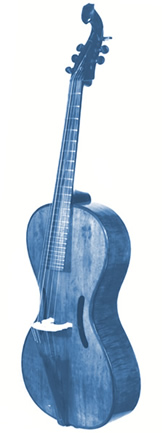
The arpeggione is an instrument which is obsolete nowadays. Pretty interesting instrument which is somewhat like a cross between a cello and guitar. Fretted, the instrument is played with a bow and tuned to the guitar. Back in the early 19th century, Schubert wrote a sonata for the arpeggione and piano, in an attempt to promote this instrument.
Written in November 1824, the Arpeggione Sonata is one of his many late compositions which candidly reflects this Austrian composer's volatile emotional state due to the effects of the syphilitic infection which he had contracted. This composition is such a gem in itself simply because it is the sincere reflection of how this one of the most gifted composer had felt in the last years of his life. This fact alone gives meaning and a deep emotional value to every single note and chord which is written.
This sonata was written two years after the dreaded disease had set in. The music exhibited the same cyclothymic characteristics as the effects felt by Schubert from the onslaught of his venereal disease. The more I listen to this music, the stronger the emotion of melancholy I feel. Somehow, it seems that Schubert, in the midst of his physical and emotional pain (probably from the social stigma associated with syphilis), laments the transience of life and reminisces the good times which he had had.
One feature of this composition which strikes me upon the first hearing were the various almost unexpected changes of mood throughout the music. At the same time, I'm well amazed at how Schubert had the magical musical ability to blend those extreme diverse emotional moods into a seamless music composition of the highest quality.
Though Schubert had immense respect for his contemporary Beethoven, the intensity of those emotions in his music isn't conveyed through to the listeners by intense drama found in Beethoven or Mahler's music, but his own unique poetic style. His lyricism and poetic qualities shines through even in the maddest moments of his music, touching the listeners in the most special way.
And of course, this gem, will soon be in my repertoire. I just can't resist learning this piece of music, no matter how technically challenging it is for my instrument. I'm surprised that they actually have the first movement of this music in the ABRSM Grade 8 syllabus. The almost 10-minute movement can easily be technically and musically more challenging than the rest of the music in there.
Sunday, February 12, 2006
Homenaje Écrite Pour Le Tombeau de Claude Debussy
This piece of music represents one of the first modern compositions written for the guitar by a non-guitarist in the twentieth century - renowned Spanish composer Manuel de Falla. The work revealed his admiration and affection for Claude Debussy with its persistent habanera rhythm as heard in the latter's Puerta del Viño from his Preludes (Book 2) and a quote from La Soirée Dans Grenade to end the piece.
This modern music captured my attention quite some time ago with her ability to evoke the most colourful scenes of Spain, tinted with the pallet of French impressionism. The analysis by Suzanne Demarquez summed this masterpiece up pretty decently:
And of course, this masterpiece will soon be in my repertoire... =)
This modern music captured my attention quite some time ago with her ability to evoke the most colourful scenes of Spain, tinted with the pallet of French impressionism. The analysis by Suzanne Demarquez summed this masterpiece up pretty decently:
Falla's piece is a funeral dirge, a symbolic threnody, so frequent in Spanish poetry, influenced by the musical essence and spirit of his departed friend. Its harmony rests on the fundamental fourth of the typical - and so beautiful - chord of the guitar, E-A-D-G-B. Falla places a short rhythmic phrase on this fourth, a kind of muted and bitter lamentation which resounds like a knell throughout the piece. Several echoes of Ibéria (a symphonic poem by Debussy) form the beginning of a theme, a brief motif in triplets marked by the characteristic chromaticism and the augmented second. The special resources of the guitar are skilfully exploited through the arpeggios, very open chords, glissando scales, punteado effects and octave harmonics.And of course, Demarquez describes this most beautiful ending section which...
sets in bold relief, like a brief ray of moonlight, the clear appareance of a textual citation of the habanera motif, evoking La Soirée Dans Grenade. It is followed by a brief pause. The knell sounds for the last time and gradually fades away in the silence.How apt has Demarquez put it. Though this piece of music that lasts just slightly over three minutes, listening to it is a heart-stirring experience as the emotional intensity of this music manifests itself by grabbing your full attention.
And of course, this masterpiece will soon be in my repertoire... =)
Subscribe to:
Posts (Atom)